
 RSS Feed


SCHOOL FOR THOUGHT
Everybody wants to reinvent the wheel
Our posting a few days ago, A Big Mistake About Small Schools, highlighted the Gates' Foundation billion-dollar mistake in promoting small schools. Jay Greene has a scathing column about their next major initiative, Measuring Effective Teachers (MET), Although MET cost only $335 million, it too is a failure and waste of money. And those of you who click through to Jay's column will notice that the foundation has also spent a lot of money on bricks and mortar (or perhaps I should say steel and marble).
We find it interesting how resistant the Gates Foundation is to school choice, choosing instead to pursue a series of weird crackpot ideas in a futile search for the holy grail. Perhaps the powers-that-be will take note of Florida's scores on the latest round of TIMSS/PIRLS and get on the school choice bandwagon. After all, if the Gates Foundation had elected to spend $2 billion on school choice instead of pouring it down the drain as they did, millions of children's lives would have been changed for the better.
Maybe Bill Gates should have talked to Walter Annenberg who squandered $500 million on a similar folly.
SCHOOL FOR THOUGHT
How well can you concentrate?
Here's a short video that tests your powers of concentration. Feel free to let us know how you did on the test. And look for more on this in the near future. YouTube link
SCHOOL FOR THOUGHT
Grade 8 students are not a captive audience in Ontario
The public school teachers' unions would do well to heed this article in today's Globe and Mail. In Ontario, you don't have to be Catholic to send your kids to a publicly-funded Catholic high school, heightening the competition between the two systems. The article reports that this year's crop of Grade 8 students, who are currently deciding where to attend high school, are being influenced by the prospect of no extra-curricular activities in the public high schools.
Nor are the Catholic schools the only market share challenger. There are also the French publicly-funded schools and, of course, the private schools, both of which would be wise to play up their continuing extra-curricular offerings.
The bottom line is that the public school teachers' unions may be jeopardizing their members' livelihoods with their antics.
SCHOOL FOR THOUGHT
Some assembly required….....
Here's a very short video that shows how versatile the new technology can be. The daughter asks her father how he likes his new i-Pad. It's in German, but you'll get it, don't worry. link H/T LL
SCHOOL FOR THOUGHT
A big mistake about small schools
I'm currently reading a book called Thinking, Fast and Slow by Daniel Kahneman who won a Nobel Prize in Economics for his work on judgment and decision making, and I will be reviewing this book after I finish it. I am finding much of the book quite fascinating, and I thought our readers might be interested in this excerpt (pp. 117-118) from the chapter entitled "The Law of Small Numbers". It deals with why some large American foundations came to waste $1.7 billion on an initiative to promote small schools. That's an expensive mistake!
"Many researchers have sought the secret of successful education by identifying the most successful schools in the hope of discovering what distinguishes them from others. One of the conclusions of this research is that the most successful schools, on average, are small. In a survey of 1,662 schools in Pennsylvania, for instance, 6 of the top 50 were small, which is an overrepresentation by a factor of 4. These data encouraged the Gates Foundation to make a substantial investment in the creation fo small schools, sometimes by splitting large schools into smaller units. At least half a dozen other prominent institutions, such as the Annenberg Foundation and the Pew Charitable Trust, joined the effort, as did the U.S. Department of Education's Smaller Learning Communities Program.
"This probably makes intuitive sense to you. It is easy to construct a causal story that explains how small schools are able to provide superior education and thus produce high-achieving scholars by giving them more personal attention and encouragement than they could get in larger schools. Unfortunately, the causal analysis is pointless because the facts are wrong. If the statisticians who reported to the Gates Foundation had asked about the characteristics of the worst schools, they would have found that bad schools also tend to be smaller than average. The truth is that small schools are not better on average; they are simply more variable. If anything, say Wainer and Zwerling, large schools tend to produce better results, especially in higher grades where a variety of curricular options is valuable."
SCHOOL FOR THOUGHT
Sunday at the Movies (Rocketship Schools)
Here is a warts-and-all clip about a for-profit operator with aspirations to scale his successful charter schools. At present, Rocketship has seven schools, all in California, and they are among the best-performing schools for low-income students in the state. The plan is to have 46 Rocketship schools up and running within five years.
SCHOOL FOR THOUGHT
Other schools for thought
From time to time we get Facebook comments to some of our postings, and here are three recent ones.
Donna wrote: "One size does not fit all. But charter schools for "special needs" do not sound like inclusiveness to me. Read "what we believe" before you 'like' this page. There is a lot of direct instruction going on in our classrooms today. Making schools compete for students based on results leads to exclusion of students who have difficulty demonstrating their learning. A strong public school system provides for all students, rich and poor, in urban and rural schools. Please look at the work our unions do in putting these ideals foremost in our policies. "
Michael wrote: "Good Gawd - You Made A Mistake - Mike Harris and his Common Sence Bull Crap Theme and Tea Pot Timmy Hudak - We will Crush Them Idea's would never Advance Education Either..."
Marcy wrote: "The SQE is a 'front' group for the proliferation of 'choice.' This, in turn, is a code word for privatization and the stalking horse of a political campaign to discredit and dismantle the public school system in Canada. Try as one might - and I have tried for the past five years - there is no credible, peer-reviewed evidence to support the self-serving claim the private education produces a 'better' (read more satisfied, successful, academically able) cohort than does the public system. Please see the research of Dr. George Blumen (professor emeritus, UBC. In fact, when adjusted for all the pertinent variables, the public system does markedly better at educating all Canadians than does the private one. For those who sneer at progressivism and perpetuate the myth that public schools are edifices of archaic and useless (even harmful) pedagogy, I invite you to visit any public school, from K through grade 12 here in BC and be suitably spanked. Public school teachers have led the way in important pedagogical 'innovations,' from co-operative learning, FIE and the use of the work of Lev Vygotsky, digital arts classrooms, and many more. The notion that the public system is a "monolith" is, similarly, not corroborated by the evidence. It is, rather, a veritable mosaic or mosaics."
SCHOOL FOR THOUGHT
Mr. McGuinty learns a hard lesson
 We have said it before and we'll say it again: All the unions want is more money and it will never be enough. Too bad for Dalton McGuinty that he didn't heed our advice - seeming to think that being generous to the unions for nearly ten years would buy him some goodwill and co-operativeness. So now the irresistible force has met the immoveable object in Ontario - the unions want more money and the government has none to give.
Adam Radwanski has an interesting take on this in today's Globe and Mail, hinting that Mr. McGuinty is hurt and disappointed by the unions' ungratefulness. Mr. McGuinty would have done well to talk to some of his predecessors who also made the mistake of thinking they could make friends with the teachers' unions - Bob Rae and Bill Davis.
It would probably be more sensible to try to make friends with a tiger.
SCHOOL FOR THOUGHT
You be the judge
Here's a quickie video that lays out both points of view as to who is in the best position to make decisions about kids' futures.
SCHOOL FOR THOUGHT
Put your brain on steroids
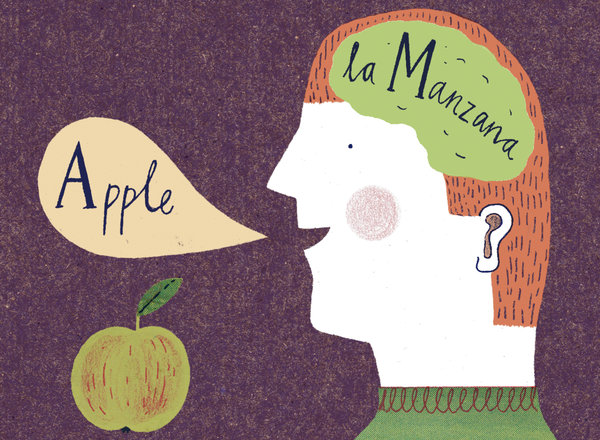 Everybody knows that physical exercise is good for you, and to a lesser extent everyone knows that mental exercise is good for you too. Somewhat lesser known again is how good bilingualism is for you, and here is an article that explains why that is the case. In a nutshell, being bilingual builds in a brain workout. With both language systems active all the time, even when the individual is using only one language, the resulting interference forces the brain to work hard to resolve the conflict.
Bilingualism is kind of a way to force your brain to go to the gym. H/T Chas