
 Subscribe to our Blog


Worth the Wait
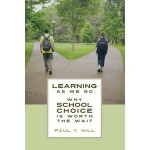
Now available from our lending library is Learning As We Go: Why school choice is worth the wait by Paul T. Hill, the director of the Center on Reinventing Public Education, which studies alternative governance, financing, human resources, and accountability systems for public elementary and secondary education.
The lack of stunning gains for American school choice programs (charter schools in 43 states and vouchers or tuition tax credits in about a dozen jurisdictions) has emboldened critics and dismayed supporters alike. This book posits that, while the theories behind the school choice movement are correct, they fail to take into consideration "the real-world factors that can complicate, delay, and even in some instances interfere with the cause and effect relationships identified by the theories behind school choice". These real-world factors include political opposition, entrenched systems, inevitable time lags, and the complexity of creating good schools. The excerpt elaborates on the forces behind political opposition to school choice. (pp. 21-22)
"School choice threatens to upset existing patterns of resource allocation and substantive decision-making. It is too simple to say that the interests standing against choice are those that now benefit most from the existing arrangements in public education - but only a little. There are individuals and groups with no children in schools and no personal financial interests at stake who nonetheless adhere to the ideas sketched above. Moreover, some families that could exercise choices that might benefit their children educationally avoid doing so, out of a belief that keeping their children in traditional public schools is an act of civic virtue.
"However, the main interests at stake are those of people whose jobs, incomes, or positions of power depend on the current arrangements in public education. These groups include current public school employees, particularly permanent district central office staff, state school officials, and teachers' unions.
"These groups have strong interests in keeping key decisions within traditional channels. Most choice plans eliminate automatic spending on state and district bureaucracies, requiring instead that funds flow first to the schools parents choose and then to external service providers only if schools decide to buy their services. These provisions threaten bureaucracies that now control as much as half the money available for public education and offer guaranteed life-time employment to their staffs. Most choice plans also transfer authority for teacher-hiring and pay-setting to individual schools. This further weakens the central bureaucracies that are now staffed to hire and allocate teachers. More importantly, it undercuts teachers' unions in two ways. By making individual schools the employers of teachers, choice would render district-wide collective bargaining units moot: teachers would organize at the school rather than district level. Teachers' unions would therefore lose the capacity to control teacher pay and working conditions for a whole district with one collective bargaining agreement. They would also be at risk of losing members as teachers in some schools might choose not to unionize...."