Donate now

Privacy Policy

Protection of privacy is our first concern, and SQE does not sell or trade information provided by its subscribers or supporters. Your information is used to process donations and newsletter subscriptions, and to contact you about upcoming publications and events.

feed iconSubscribe to our Blog

Follow Us
Follow SQESocQualEd
on Twitter

Please note Downloads require you to have the Adobe Reader installed, you can get it here for free Adobe.com


Society for Quality Education

Teaching practice, SES,  School Choice = No more excuses
Teaching practice, SES,  School Choice = No more excuses
May 28, 2010 by .(JavaScript must be enabled to view this email address) at 11:58 AM

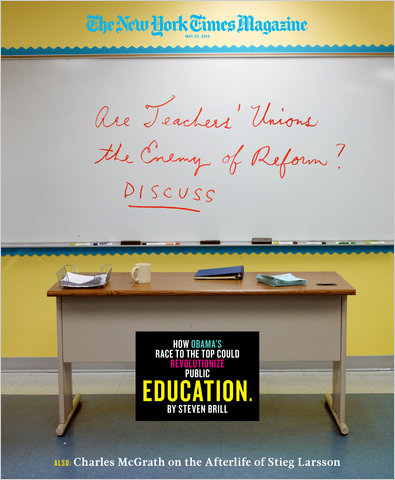
Many School for Thought readers have brought the NYTimes article on Obama's Race for the Top to our attention.  Teachers' Unions' Last Stand is a long essay outlining how the need for improvement, accountabilty and the demand by parents for school choice has lead to the Race for the Top program.  The article also explains how Democratic politicians have changed their tune when faced with a growing constiuency that wants school choice.

"The teachers' unions have become accustomed in recent years to fighting off reform efforts by Republicans and think-tank do-gooders. They ignore the rhetorical noise, while sticking to the work of negotiating protectionist contracts with the politicians who run school systems and depend on their political support. But what happened last month in Washington could signal a new era in which the unions have to worry that Democrats, like Washington's mayor, Adrian Fenty, not only won't yield in contract negotiations but will also support laws and programs aimed at forcing accountability."

On the SES argument, the article outlines two schools with identical populations, even having kids in both schools from the same family, but getting very different results:

"Same building. Same community. Sometimes even the same parents. And the classrooms have almost exactly the same number of students. In fact, the charter school averages a student or two more per class. This calculus challenges the teachers unions' and Perkins's "resources" argument - that hiring more teachers so that classrooms will be smaller makes the most difference. (That's also the bedrock of the union refrain that what's good for teachers - hiring more of them - is always what's good for the children.) Indeed, the core of the reformers' argument, a'd the essence of the Obama approach to the Race to the Top, is that a slew of research over the last decade has discovered that what makes the most difference is the quality of the teachers and the principals who supervise them. Dan Goldhaber, an education researcher at the University of Washington, reported, "The effect of increases in teacher quality swamps the impact of any other educational investment, such as reductions in class size.'

This building on 118th Street could be Exhibit A for that conclusion.

'I've got one child in a charter and have had two in public schools,' says Bernice Wynn, who runs an optician's shop on Lenox Avenue with her husband, and whose daughter, Tiana, is in the Harlem Success Academy. 'There is no comparison. Tiana is in first grade and already reading chapter books and writing stories.'"

In order for states to be eligible for Race for the Top funding, they will be assessed on a number of criteria and teacher accountabilty is a big one.  No more will tenure trump good teaching.  In fact, teacher colleges will be part of the accountabilty equation. 

What does all of this mean for Canadian schools?  Well, we are probably about 10 years behind U.S. reforms.  We are still looking at class size when other jurisdictions, like California, have "been there, done that" a decade before with all usual complications.  Malcolm Gladwell's negative comments about Ontario's experience with class size caps, made right in front the Premier, must have made quite a few educrats squirm.  Gladwell, who has made a career out of looking at outliers and tipping points, was right.  Student achievement depends on effective teaching.

This study looks at the link between teaching practice and student academic performance:

Abstract:

"Quantitative studies of school effects have generally supported the
notion that the problems of U.S. education lie outside of the school. Yet
such studies neglect the primary venue through which students learn, the
classroom. The current study explores the link between classroom
practices and student academic performance by applying multilevel
modeling to the 1996 National Assessment of Educational Progress in
mathematics. The study finds that the effects of classroom practices,
when added to those of other teacher characteristics, are comparable in
size to those of student background, suggesting that teachers can
contribute as much to student learning as the students themselves."

Highlights:

"Quantitative research on whether schools matter has generally supported the notion that
the problems of U.S. education lie outside of the schools. Some research finds that when
the social backgrounds of students are taken into account, school characteristics do not
seem to influence student outcomes, suggesting that schools do not serve as avenues for
upward mobility, but instead reinforce existing social and economic inequalities" 

However, "The study finds that classroom practices indeed have a marked effect on student achievement and
that, in concert with the other aspects of teaching under study, this effect is at least as
strong as that of student background. This finding documents the fact that schools
indeed matter, due to the overwhelming influence of the classroom practices of their
teachers."

"The first hypothesis, that, of the aspects of teacher quality, classroom practices will have the
greatest effect, is confirmed by the models."

"Another important interrelationship involves the trade-off between teacher quality
and teacher quantity. Smaller class sizes are negatively associated with teachers majoring in
their relevant subject and in receiving substantial amounts of professional development,
whereas teacher major and time in professional development are positively associated with one
another. These relationships suggest that schools tend to choose between hiring more teachers
or investing in improved teacher quality through recruiting teachers with better preservice
training and providing teachers with more and better in-service training."

So for Canadian students, a lower family income doesn't have to doom them to poor expectations and/or failure.  They are certainly challenged, but with effective teaching practice combined with parental school choice to find it, there is hope.

Comments

Thank You for this posting.I read the article last Sunday .

Are we here at SQE the only ones who read the NY Times?Does the Ministry of Ed not read about the research and the reforms in the U.S. aimed at improving education for education`s clients-the tax payers?

Why do they reinvent the wheel on everything?
Even with the Early Years Plan-are they going to read the research and see what should be taught or is it just going to be a baby sitting service?
I am stumped.

Thank You-your points are well taken!

Posted by Jo-Anne Gross on 05/28 at 03:57 PM

The evidence for SES as THEcritical factor is overwhelming and conclusive. Most charters score behind their local PS. A few do better. Research says those who do better can attribute 100% of the difference to longer hours. Longer hours can easily be accomplished in public schools without asking teachers to teach more, just using more teachers. It will not come cheap however. Either way, more teacher time means more money.

The Americans have a particular syndrome not common to other countries. It goes like this “we want more but we don’t want to pay more”. Other countries realize “you get what you pay for”.

Posted by Doug on 05/28 at 06:07 PM

Points are valid, except for one, who never gives links to support his viewpoint. I live in a community, where there is a lot of low-income. I believe in Canadian schools, no matter what province there is other factors at play, that limits the effects of low income. Our social net plays a role, as well as other tax credits that helps out. Our schools provides a lot of free resources. And some provinces provide breakfast and lunch programs, that are either free, or a small cost associated with it, for parents who can afford to pay for the meals.

That said, the thing that is left, is the teacher and the principal of the school. Often as I have observed and experienced, it is not the teachers. Often it is the administration that prevents good teaching to occur. The studies that suggests, “Some research finds that when
the social backgrounds of students are taken into account, school characteristics do not
seem to influence student outcomes, suggesting that schools do not serve as avenues for
upward mobility, but instead reinforce existing social and economic inequalities.” 

I believe it does reinforce existing social and economic inequalities, that are present at the school. One can see it, in the middle to low income schools. Everyone has a pecking order, that is the parents, including the children. Where one sees it the most is the kids that has the label LD. Very few middle to upper income, are labeled LD. Yet the children do get access to the reading and writing programs, a lot easier than children who are in a lower income or social standing.

I know the teachers can do a lot more, and some do it, despite it hurting their own careers. I had a grade 2 teacher, who supply the monthly drill sheets in LA and Math, on her own nickle to give to my child. It was at a time, where the principal insisted that my child had no learning problems what so ever.

I disagree with longer hours in the classroom. Longer hours using the present day curriculum, will still produced the same results. In Asian schools, they do have longer hours, but the longer hours the students are learning their basics very well. One of the reasons they are good at math, because the students practice and practice. The use of drill sheets are used often. Than there is Finland, and they operate on shorter hours, and school is not mandated until the child is 7 years old. Finland is at the top. What do Asian and Finland schools have in common? A good curriculum, and good teaching methods. What do North American schools have in common?  A curriculum based on an educational philosophy.

So I agree: “So for Canadian students, a lower family income doesn’t have to doom them to poor expectations and/or failure.  They are certainly challenged, but with effective teaching practice combined with parental school choice to find it, there is hope.”

Posted by Nancy on 05/28 at 07:27 PM

Nancy is correct, the advanced socialist safety net in Canada mitigates some of the effect of SES in Canada in comparison with the USA. Nevertheless, SES is still THE critical difference between high achievement and low achievement schools. SES denial simply makes a fool of the denier in the face of all of the research.

Posted by Doug on 05/29 at 05:51 AM

You`re stuck Doug-the research shows research based instruction equalizes a classroom-it`s the instruction- when lacking-that makes the critical difference-I know this for a fact in my work with First Nations communities-and of course I read the research-

When you teach all of them to read and spell day one with research based practice you get an 80% classroom success.It`s the great equalizer and we need to be doing it!The biggest thing we need is accountability!

Posted by Jo-Anne Gross on 05/29 at 06:08 AM

In Canada, there is few studies done on SES and the impact. One poster, declares SES is the critical difference between high achievement and low achievement schools. The studies in United States, where there is many studies on SES, have not declared that SES is the only factor that is affecting achievement in the schools.

What the studies do declared that in the ones that I have read, and the two links that will be provided, is that schools can address the SES factors, by teacher quality, teacher methods, and good curriculum. What the studies have found that schools sharing the same SES factors within the same geographic boundaries, are found to have high and low achievement rates. The difference is the teaching quality, along with teaching methods and curriculum. Another conclusion, that is common among the studies, is the achievement gap between high SES students and low SES students stays relatively the same throughout elementary school, and the widening of the gap increases at the start of high school. One can conclude with reason, that SES can be overcome by the schools, but the solutions still have not been answer to any degree, with the studies. Further research is being conducted to answer the question, how and what the schools can do, to dilute the SES factors. It sure points to teacher quality and curriculum.

In the Canadian study, the conclusions are: “More specifically, we have found evidence that the SES gap remains roughly stable from the age of 7 to 11 years, that is, more or less between grades 2 and 6. Thereafter, the gap widens at an increasing rate of change up to the age of 15 years, that is, from about the beginning of grade 7 to grade 10. In other words, achievement differences among students
of varying socio‐economic backgrounds remain invariant during elementary school and sharply widen in the transition from elementary school to middle school. Furthermore, throughout middle school years and up to the beginning of high school, the gap widens at an increasing
rate of change. Ultimately, the average gap between the ages of 12 to 15 years is twice as large as the average gap between the ages of 7 to 11 years.”

Implications for policy and research:
“A first hypothesis is that because school practices are not neutral in their treatment of students of varying socio‐economic backgrounds, they mediate SES increasing effects on academic achievement. This hypothesis is consistent with Kerckhoff’s (1993) argument about institutional arrangements: socio‐economically biased assignment into groups during school years produces divergent educational outcomes among SES groups (i.e., low SES children being repeatedly located in low ability groups and high
SES children, in high ability groups). Even in systems that do not assign students into different schools, ability grouping within classes and/or
course‐enrollment patterns, as in Canada, can have the same effect (Hoffer, 1992; Schnabel et al., 2002).”

“A second hypothesis is that the out‐of‐school context increases disparities among SES groups. Children spend much of their time outside school and the quality of non‐school environments varies widely. Thus, some scholars argue that the out‐of‐school context, mainly the family environment, produces divergent achievement trajectories among high and low SES students (Alexander, Entwisle, & Olson, 2001, 2007; Downey, von Hippel, & Broh, 2004). The school serves actually as equalizer.
Although schools do not reduce disparities in the absolute sense, these increase less when school is in session.”

http://www.csse.ca/CJE/Articles/FullText/CJE32-3/CJE32-3-CaroEtAl.pdf

The second study is an American one.

“Lagging achievement is a problem for poor
and minority children and for the broad
middle class.”

“Inequities in teacher quality and school
funding are pervasive.”

“What happens in schools and school systems
matters profoundly”

“Better data is essential.”

The above 4 are findings in this study.

http://www.mckinsey.com/app…/socialsector/pdf/achievement_gap_report.pdf

Posted by Nancy on 05/29 at 07:46 AM

terrific article!

That Doug’s comment has nothing whatsoever to do with the message and research contained in the article should not be a diversion.

“The Americans have a particular syndrome not common to other countries. It goes like this “we want more but we don’t want to pay more”. Other countries realize “you get what you pay for”.”

And then in Ontario what we pay for we don’t get…students literate and numerate enough to go confidently into the real world of post-secondary and employment.

Posted by Chuck on 05/29 at 08:09 AM

To add further, and in particular Joanne’s statement, “When you teach all of them to read and spell day one with research based practice you get an 80% classroom success.It`s the great equalizer and we need to be doing it!The biggest thing we need is accountability!”

There is numerous newspaper articles, across the world, on the use of Direct Instruction. It is the resounding success of DI and achievement rates. The latest article that came to my e-mail box, comes from Australia.

“The new principal, Geoff Higham, 59, drafted early this year to replace his less than enthusiastic predecessor, remembers how students in years 8 and 9 used to bring iron bars to school. ‘‘The senior boys were out of control. They were reading at kindy level and they hated everything about school,’’ he says. ‘‘It’s hard to believe the transformation in just 15 or 16 weeks. ‘‘This is a wonderful system. All the children are put into ability groups so no one is failing. The teachers aren’t failing. The children aren’t failing … It’s a magnificent successful educational experiment.’‘

Having taught in hardscrabble schools from Kenya to Thursday Island, the former Victorian describes himself as an old-fashioned ‘‘chalk and talk’’ teacher. His previous schools have been described as places where ‘‘even the grass sits up straight’‘. He says DI accords with his educational philosophy, that every child can learn, given a disciplined routine and effective instruction. But even in his wildest dreams he hadn’t known how effective DI could be.

‘‘I have no doubt the pupils will be at the national level in maths and English in three years’ time, and many children will be one, two or three years above that level.’‘

Just a bit more, because it just gives me goose bumps to read about kids that are written off early.

“She tells the story of the eight-year-old boy who came to her one morning proudly telling her how he had applied his previous day’s lesson. ‘‘Miss, I saw a frog, and I said, ‘You are an amphibian. You are born in water and raised on land.’‘’

An essential part of the DI program is weekly testing and data crunching. Every Thursday, 120 pages of detailed test scores and information about each student and class is faxed to a DI centre in North America to be analysed. The following Tuesday, the school leaders have a conference call with DI experts in Oregon, about any problems identified.

For example, the data may pinpoint a deficit in a particular child’s understanding that came from a particular work sheet in a particular lesson that may have been taught six weeks earlier. The solution is prescribed and the process repeats itself.

The children seem to thrive on the organised routine. Even those difficult older children in years 9 and 10, who have not gone away to boarding school like most of their peers, and who were expected to be too far behind to reap many rewards from DI, have responded in a way that is heartening and heartbreaking, as you consider countless lost opportunities.”

Last but not least - “The next stage in Pearson’s plan is to extend the school day to run from 8.30 am to 4.45 pm, with direct instruction of basic skills until 2.15 pm. Afternoons will be devoted to two crucial areas of learning: Club, which is physical activities such as Auskick, and Culture, which is devoted to learning their traditional Aboriginal culture and becoming literate in the first language of most Aurukun children, Wik-Mungkan.”

http://www.smh.com.au/opinion/society-and-culture/scripted-lessons-start-a-classroom-revival-20100528-wlba.html?rand=1275054515639

Posted by Nancy on 05/29 at 08:44 AM

hmmm.  How does my husband say it—‘a fracture usually leads to a permanent break’.  School choice is the fracture in the union-run monopoly—a permanent break will follow.  The sooner the better!

Posted by Bev on 05/29 at 12:54 PM

Unfortunately, there is very little popular demand for school choice in Ontario right now. There have been options for forming alternative schools on the books for decades, but few parents or teachers have taken advantage of these opportunities. Bill 160 provided for formation of alternative religious schools .  Yet,  there has been low public demand or action to enlarge the choices available even though the mechanism to do so is there. True,  groups (whether parents or teachers) have to jump through a bunch of hoops, but there are people designated to assist them in doing this,  and there has been no onrush of applicants. A few proposals have been rejected, mainly because of equity concerns. You would think if there were a large number of parents out there who wanted a school that featured Direct Instruction, or Montessori methods, Orton-Gillingham or Personalized System of Instruction or something similar, they could have banded together and submitted a proposal.

That has not happened. Not because of union opposition—there are enough teachers already in the union who would jump at the chance to work in such a setting—but for lack of demand. From my non-statistical observations, I have found a measurable minority of teachers, principals and ether education workers who support the idea of charter school or voucher systems or less-regulated alternatives, but this minority is similar to the minority in the population at large—probably under 10 percent, not large enough to make a significant difference. Increasing the demand is a necessary precondition to effecting change.

Posted by TDSBNW on 05/30 at 09:01 AM

The wave of desire for school choice, that is looming larger and larger in the States, will hit Ontario’s shores sooner or later.

Posted by Bev on 05/30 at 10:41 AM

Lack of demand?  The lack of demand from parents, is the lack of the knowledge, where the parents have to look and search for the information. The public education system is unlikely to promote school choice, alternative schooling, alternative teaching methods, or anything else that does not promote the core values of the people who work within the public school system.

Of course what comes in handy, some of the misconceptions that are promoted, such as education is left best to the educators of the public education system. The parent’s job is to provide the environment at home for learning (which is common sense), but do not help the child to learn the instruction material, in a different way from the instruction at home. Many variants to it, but most parents think that teaching at home, is to be avoided. One of the funny ideas that parents have, which I experienced in Ontario just a 1 1/2 years ago, is that teaching at home, relearning material in a different way than the prescribed school method, is a form of cheating. Now where do parents get that idea from?

Of course the demand of choice can be kept down, by the nature and structure of the public education system. Just by not highly publicizing the alternative education in Bill 160. How many people are really concern with any government bill, at any level and no matter what type of bill it is?  One needs a high order of reading skills, just to read any type of bill, and understand the implications of the bill. Nor can the media be depended on to translate the bill and the implications of the bill.

Posted by Nancy on 05/30 at 01:27 PM

So when Dalton McGuinty`s war room guru`s kid asks his dad to ask the Premier for permission to home-school can home-schoolers expect some help from his government.


``Important question
May 28th, 2010, 7:05 am

Youngest son, just now: “Daddy, have you asked Dalton McGuinty if I can be home-schooled, yet?”

Posted in Musings | 6 Comments »``

as posted at Warren K. blog

Posted by notasheep on 05/30 at 03:13 PM

The wave of desire for school choice, that is looming larger and larger in the States, will hit Ontario’s shores sooner or later.

Well, I hope it does—the sooner the better. But I am not so sanguine about its chances. Not every movement that catches on in the USA migrates north of the border. I would love to have seen an Ontario version of “Reading First” or of Response to Intervention, or of the right to FAPE (free and appropriate public education—we have free and public, but not appropriate).  You would think that school choice would appeal to parents in ethnic groups and minority communities whose children are at present not well served by the school system.  There are a number of activist parents in my current and previous school, parents who make deputations to the board, who phone the Ministry and lobby for this and that—but not a single one has been sympathetic to the idea of school choice beyond the public alternatives that now exist (or might in the future).

I was surprised by this, myself.  Here were politically active, dissatisfied parents—but school choice is not something they support.  Like many Ontarians, they are in favour of a heterogeneous, inclusive public system that puts social justice ahead of academics. Few are much interested in details of instructional methods or programs. Almost all are hostile to “Special Ed.” Even if they have a child with a disability—and some do—they do not want the IPRC process or a Special Ed identification for their child. They want him or her in the mainstream, preferably without an IEP. In my fairly large K-8, we don’t have a single child in K-5 who is “Special Ed”—we have quite a few kids with autism, cognitive disability, language impairment, reading disabilities, speech difficulties, dysgraphia, fetal alcohol syndrome—yet none are “special ed” because their parents reject that whole process and the Ministry supports an inclusive approach.

A recent survey done by the TDSB, which examined attitudes towards schools and achievement by ethnic group, found that 80% of parents, even parents of the lowest-achieving students, were “very satisfied” with the schools and expected their children to go on to university.  The number who were dissatisfied was very small.

Certainly there are people who are dissatisfied (and some of them are employees!) but there is nowhere near a critical mass needed to make change happen. Will it in the next decade?  As the Ministry intensifies its micromanagement from the top, perhaps dissatisfaction will increase.  We shall have to wait and see.

Now as to Nancy’s observation:

One of the funny ideas that parents have, which I experienced in Ontario just a 1 1/2 years ago, is that teaching at home, relearning material in a different way than the prescribed school method, is a form of cheating. Now where do parents get that idea from?

You can certainly find different attitudes in different parts of the province, but this attitude is not one I have ever seen in the GTA.  Some schools actually tell parents on curriculum night that teaching the math facts, spelling etc. is THEIR job, not the schools’ (and they are right that these things are not in the Ontario Curriculum), so parents taking an active role is encouraged. A friend who teaches in York Region told me every single one of her students had a private tutor.  Schools provide parents with referrals to tutors and teachers prepare or recommend materials for parents to work with at home if they request this. I’ve loaned DI programs to parents.  We don’t have “prescribed methods” any more (since we are to differentiate for every learner and every possible learning style). I’ve never heard anyone suggest that parents working with their kids to learn the material (however presented) were “cheating.”  When anything goes and all “modalities” are equal, how can you cheat?  We aren’t supposed to count work done at home towards report card grades, so parents over-helping their children is not a concern.

However, the ethos could certainly be different elsewhere. The way things are in one’s own backyard is not the way of the world, necessarily.  But, major structural or policy changes will have to involve a significant number of urban parents, who so far do not show such an inclination.  We can hope.

Posted by TDSBNW on 05/30 at 05:47 PM

“Here were politically active, dissatisfied parents—but school choice is not something they support.  Like many Ontarians, they are in favour of a heterogeneous, inclusive public system that puts social justice ahead of academics. Few are much interested in details of instructional methods or programs. Almost all are hostile.”

Politically active dissatisfied parents, I can only dream of that development in my corner of the world. However, the part that parents are hostile to special ed, keeping them out from being label and out of special education services, is very true in many other places. I put the problem to the culture and the very processes, the structure of the school, that the emphasis for parents is that their own children become part of the norm, as much as possible. Becoming part of the crowd is a far more important goal, than the goal of resolving the learning differences among the students.

As for parents wanting a university education even for the lowest achieving kids, and are currently satisfied with the education system, are parents that I have observed over the years, that are from the lower income/social groups. The parents do not have the necessary knowledge, or the skills or the abilities that are needed to make the necessary decisions for their children. The parents are very dependent on the expertise of the education system, to make good decisions for their children. Parents of the higher income/social groups, will keep their children from being label, because it is not good for the children social status at school or the parent’s social calendar. But they do know the consequences, and will seek other avenues to address the child’s learning needs, other than the school. The parents in this group, do a disservice for public education, by not using the services of the public school, and whereby using the services, improvements will come.

As for the attitude that TDSBNW stated that he has not observed. Dig deeper with the parents who have a grade 12 or less. They often see the many forms of help that parents do for their children, such as re-teaching the lessons of the day, re-writing the notes, so the kid can read them, or teach the child math facts in a fashion, that is not school-approve is seen as giving the kid a break or an advantage or an edge on the other students. Even when one explains the whys of it, the parents on the opposing side will defend their position, to keep the image of the school being the best in handling all education decisions of their children. To admit that I am correct, is to admit that they do not have the skills to help their child. But there comes a time for these parents to face the truth. Just like it happen to some of my relatives in Ontario, where their own kids coming out of grade 12, are not getting into college, unless they take the upgrading courses for math and english.

When I was living in Ontario, I was not often exposed to parents who were extremely dependent on the schools. The way of urban life, can lead a person in forming social groups that share the same values. Now living in a different province, and a rural environment, I have met few that share my values of an education. In my area, I was forced to become an activist, and the lone wolf or the lone trouble maker. I became the trouble maker, from the first day, I asked for an assessment to check for a learning disability. It not only shocked the school, but the parents around me. Why would you want to put your child through this assessment, and as for family members, it was much worse, with the added comments, of embarrassing the family that they had a LD child in their family. If it is going to happen, as TDSBNW has suggested, it has to come from the populated urban areas, for change to happen in the education policies.

How to go about it, the attitudes have to change from self-interest to the best interests of all children. I sometimes wish, if only the world operated that way, that all parents would have one child with LD. It would not be too long before their was a system in that would work for all the children, and not just for a certain percentage

Posted by Nancy on 05/30 at 08:10 PM

I don`t think school choice is coming in Ontario-

Personal opinion-

The biggest thing that could happen to assist parents is accountability-
How would that happen-the boards that score the lowest EQAO scores do not need to try to elevate them-there is a Director of Ed I spoke to that said-we have low scores because we have so many First Nations children-
This is typical-blame the child-don`t blame the way you do things.
I had contact with someone this weekend who works in a large Toronto board who said they don`t teach them to read and the teachers want to labeL them L.D.-It`s easier than teaching them-but the truth is,they don`t know how to teach the mechanics of Reading/Spelling.
It is a science-right now-fuzzy teaching=fuzzy reading and fuzzy spelling.Dr.Diane McGuiness has another way of putting it,partial decoders.

This is a big story and one day we`ll have our own Reading First-they shouldn`t be allowed to guide pedagogy on personal view-it should be on empirical research.Every Dr.is not concocting their own Penicillin.
We have chaos because of individual view and seeing Teaching as an art form rather than honoring and delivering scientific research based methodologies.

Grant you-it seems 40% of the class figures it out-in some communities only 10%-of the class figures it out.

Strangely-I don`t know if anyone else feels this way- but inclusion may be the straw that breaks the camel`s back-of they don`t do it right in the early grades,it will be catastrophic results and teacher breakdown.

I remain perplexed at the fact they ignore research.
Look at the Trillium List-what is that?It appears strangely suspicious that it is a business relationship?

Posted by Jo-Anne Gross on 05/31 at 04:38 AM

Joanne may be correct, that inclusion may be the straw that broke the camel’s back.

Inclusion, is not the answer that many seem to think it is. The underpinnings of inclusion, the framework consists of universal design, differentiated instruction, observation, assessment,
and evaluation by the teacher, and the guidance of the educators, the support staff. I did not mentioned parents, because most of the papers I have read, parents are mentioned as after thoughts. Any real input from parents are tempered with the real-time observations of the teacher. What the teacher observes in the classroom, the subjective data collected, may be very different from the real-time observations of the parents. This is one major weakness of inclusion.

The other major weakness is differentiated instruction. From the Ontario report titled, Education for All, The Report of the Expert Panel on
Literacy and Numeracy Instruction for
Students With Special Education Needs,
Kindergarten to Grade 6, 2005;

“The theory behind differentiated instruction comes from the views of Vygotsky (1980). According to Vygotsky, social context and the interactions of the student within that social context play a fundamental role in the acquisition of knowledge. Students in their “zone of proximal development” can, with assistance, resolve a problem that they could not have resolved alone and move on to another level of knowledge. Teachers can help accelerate students’ cognitive development (Vienneau, 2005) by supporting children in resolving
problems, by questioning their conceptions, and by asking them to justify their positions (Lafortune & Deaudelin, 2001). They can also provide specific interventions, known in this context as “scaffolding”.
While Universal Design for Learning provides the teacher with broad principles for planning, differentiated instruction allows teachers to address specific skills and difficulties (Raynal & Rieunier, 1998).

Differentiated instruction requires teachers to transform their practices from a program-based
pedagogy to a student-based pedagogy. Teachers attempt to adapt pedagogical interventions to the needs of each student, acknowledging that each student differs in interests, learning profile, and level of functioning. Differentiated instruction may facilitate high levels of both student engagement and curricular achievement (Caron, 2003; Tomlinson, 2004).”

http://www.edu.gov.on.ca/eng/document/reports/speced/panel/index.html

Further to Vygotsky; “The major theme of Vygotsky’s theoretical framework is that social interaction plays a fundamental role in the development of cognition. Vygotsky (1978) states: “Every function in the child’s cultural development appears twice: first, on the social level, and later, on the individual level; first, between people (interpsychological) and then inside the child (intrapsychological). This applies equally to voluntary attention, to logical memory, and to the formation of concepts. All the higher functions originate as actual relationships between individuals.” (p57).

A second aspect of Vygotsky’s theory is the idea that the potential for cognitive development depends upon the “zone of proximal development” (ZPD): a level of development attained when children engage in social behavior. Full development of the ZPD depends upon full social interaction. The range of skill that can be developed with adult guidance or peer collaboration exceeds what can be attained alone.

Vygotsky’s theory was an attempt to explain consciousness as the end product of socialization. For example, in the learning of language, our first utterances with peers or adults are for the purpose of communication but once mastered they become internalized and allow “inner speech”.

Vygotsky’s theory is complementary to the work of Bandura on social learning and a key component of situated learning theory.
http://tip.psychology.org/vygotsky.html

I wonder what Vygotsky would say, if he was living today.  In the light of the new knowledge in brain and cognitive research, Vygotsky theory of social development, is in dispute, and the theory should be put in the trash can, so it can no longer afflict the damage it does have in the public education systems.

As for differentiated instruction, in real practice, children who have learning problems, learn real fast to think of themselves not being as capable as other students. The negative track, of I am stupid or I am dumb or the latest one I heard from the LD kids, dumb, dumber and dumbest and how they compare each other on different aspects of learning. If anything, it prevents any child in the classroom, to learn knowledge at deeper levels, because of the time that the individual child spends on figuring out the knowledge, depends on the depth of knowledge of the children, the teacher processes. The LD kids’ learning are being killed.

Posted by Nancy on 05/31 at 06:58 AM

Reading the posts over the lats several days gives me a kind of nauseated, sick feeling.  This is a compliment - it’s critically important that those of us outside “the system” have a sense of what’s going on inside.

I’m not too bullish on the rise of school choice either. There’s a lot of interia behind the current system, which surprises me in some respects.

My personal opinion is that change would require high risk-taking political leadership.  I think the issue would have to revolve around education reform in the broadest sense:  reorganize/eliminate public boards based on geography, vouchers to parents etc.  I think the spec ed angle would have to be exploited to the maximum.  I’m thinking autism and mental health in particular.  May have to take on the universities, too.

Oh yeah, almost forgot, I think one would also have to take on the mealth care leviathan, too.  Hard to see how any politician would contemplate the short term costs of education reform with health care spending now north of 40% of the budget.

Then again, if you had asked me in 1985 if it was likely the Berlin Wall would fall before I was married, I would have been pessimistic about that too.

Is there an Ontario version of Gorbachev out there?

Posted by Dave on 05/31 at 07:01 AM

It is mind blowing what one needs to learn of the educational system, in order to do battle with them on any issues, including reform.

The majority of parents are going to take care of their children’s needs first, in the best way they know how to. Most parents know there is problems in the public education system. But it is overwhelming what one has to learn to change a small aspect of the local school, that would benefit their children. It is why it is easier to take the other route, and try to work around it, or work the system.

We need political will and lots of it.

Posted by Nancy on 05/31 at 07:50 AM

Annie Kidder`s group at People for Education is interestingly quoting Diane Ravitch-and disparaging Testing-

Disparaging Testing means we let the wolves run free and Accountability goes out the window-

I have to believe they are a PR.firm for the status quo of the McGuinty Government`s education policies.

Posted by Jo-Anne Gross on 05/31 at 01:36 PM

“you get what you pay for”-Doug

Unless and until we know if the money is used appropriately that’s not accurate.  There are all sorts of ways of spending money in an ineffective or wasteful manner.

Posted by John L on 05/31 at 07:24 PM

Something fascinating-read every word-


http://www.jstor.org/pss/40173200

Posted by Jo-Anne Gross on 06/01 at 08:07 AM

TDSBNW’s comments ring a bell for me.
>>That has not happened. Not because of union opposition—there are enough teachers already in the union who would jump at the chance to work in such a setting—but for lack of demand.<<

I also think that’s true.
From my point of view as a parent what happens is that in order to know what to ask for in terms of choice you first have to figure out that something is fundamentally wrong with the current system.
Under the burden of myths sold left and right this takes usually a good 1 to 2 years.
For immigrant parents, usually it takes that long because they can’t quite believe is happening across the board; for a while they think they just had back luck with one teacher or two.

Most of the canadian born and educated parents who now have children in elementary and high-school, have been educated using child-centered methods themselves, so they don’t see anything wrong with the current system and are not aware that there are better methods.

Let’s say that at some point you become aware the situation is systemic and the only way would be school choice. By that time your child is probably in grade 2 and you - as a now knowledgeable parent - are working a few nights a week with your child to fill in the gaps. That’s on top of holding a job, commuting, sports activities.

Are you going to take a chance to spend time jumping through the hoops trying to maybe get the choice you wish you had available when you know that your child is now beyond that stage and will not be able to take advantage of it?

So it is one of these situations when a lot of people have a common interest, but the one who would make the effort would not get a lot of benefit.
I think this situation is a well known pattern and even has a name, the way “tragedy of the commons” describes another pattern.

Having some sort of high-stakes exit tests at the end of grade 8 or entry tests to high-school would start a feedback loop which will make most parents much less tolerant to their childrent not learning enough.

Posted by fromEurope on 06/01 at 05:06 PM

One of our biggest problems is that very few people here in Ontario have seen real direct instruction or good curriculum in action and seen what they can do.

Because of that, a lot of people think it’s just a bit of detail a bit of tweaking but cannot imagine and believe something radically different than what we have today. They simply do not know what we are talking about.

And that’s why, and here I have to agree with Doug, for lack of clarity, parents grab at straws. That’s why a reduction in class sizes is relatively popular.
It is concrete; it is an easy sell.

“Well, ... what do I know about teacher preparation .. well what do I know about curriculum, these are the new times so perhaps that’s what our children need today ... but at least fewer students in the class, ... well maybe my Johnny will a bit of extra attention from the teacher; that can’t hurt.”

Posted by fromEurope on 06/01 at 05:14 PM

I agree with you Europe-

It`s posturing and politics at the Ministry Level.

I see many high quality people at the school board level completely harnessed by the Ministry Guidelines.Some have discussed their frustration.The Ministry seems to lead top down like a CEO who didn`t work his way up and doesn`t really understand the intricacies of the business itself.

These CEO`s are usually the ones that fail-you have to understand the business or find a way to do it-
Workshops from the Literacy Secretariat-do they work-are they effective?etc…groan-
God forbid they should check if their stuff works-in the private business you go bankrupt..need I say more?

Posted by Jo-Anne Gross on 06/02 at 06:04 AM

I agree with both of you, Europe and Jo-Anne, however the teachers’ unions aren’t blameless in all of this—the more students who can’t seem to learn, the more specialists need to hired, therefore the larger the unions’ memberships become.  Any organization that has no checks and balances will become corrupt—it’s human nature.

Posted by Bev on 06/02 at 07:16 AM

I have heard this view from others-I guess I don`t understand it yet-I see it more as a horrible superficial teacher training at University and the very lack of explicit expertise they need to be effective.

I remain open to grasping this-I know Doretta shares your view.

Posted by Jo-Anne Gross on 06/02 at 07:22 AM

The 800 gorilla is almost always that those who’d prefer to go the alternative route are required to pay thousands of dollars, above and beyond what they’re already obliged to contribute to maintain the public system, to participate in the alternative.

Saying there’s not much demand for alternatives, while making it very difficult financially to participate in them,  is a little bit disingenuous.

Some attempt to offer something even vaguely approaching a level playing field would go a long way toward determining if there really is a demand.

Posted by John L on 06/03 at 02:46 PM
Page 1 of 1 pages

Leave A Comment

Name:

Email (required but not displayed):

Emotions

Notify me of follow-up comments?

Submit the word you see below: