Donate now

Privacy Policy

Protection of privacy is our first concern, and SQE does not sell or trade information provided by its subscribers or supporters. Your information is used to process donations and newsletter subscriptions, and to contact you about upcoming publications and events.

feed iconSubscribe to our Blog

Follow Us
Follow SQESocQualEd
on Twitter

Please note Downloads require you to have the Adobe Reader installed, you can get it here for free Adobe.com


Society for Quality Education

Believing in Teachers

June 14, 2013 by .(JavaScript must be enabled to view this email address) at 05:11 AM

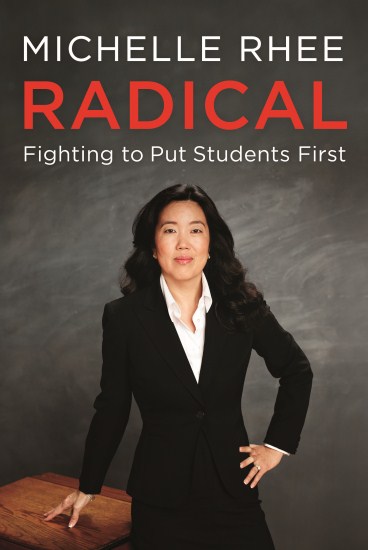
I'm currently reading Radical: Fighting to put students first by Michelle Rhee. Ms Rhee was a Teach for America teacher who discovered that it was possible to transform the lives of her ghetto students - and then became enraged because most ghetto students are just being written off. 

After acknowledging that it is extremely diffiicult to teach disadvantaged students and that schools should not be expected to solve all of society's ills, Ms Rhee says that teachers can - and should - make an enormous difference in their students' lives. Here's an excerpt from pp 209-210.

"The research is very clear: teachers make a real difference. In fact, of all in-school factors, the quality of the teacher in front of the students every day has far and away the greatest influence on student achievement.

"According to a 2011 report prepared by the Center for Amerian Progress and the Education Trust, 'Students who have three or four strong teachers in a row will soar academically regardless of their racial or economic background while those who have a sequence of weak teachers will fall further behind...'

"Many argue back, 'But that's a measure of in-school factors. Compared to the factors outside the school, teachers don't play as large a role.

"I would ask, 'What is our job as educators?' I would argue that we, as educators, cannot be focused on the external factors. There are social service agencies and programs that exist to help families deal with problems beyond the schoolhouse. Educators should, while acknolwedging those circumstances, focus relentlessly on what can happen when we have the children in the clssroom.

"If we believe that the external factors are simply too difficult to overcome, then why do we have schools? In a city such as Washington, D.C., if we believe schools can't make a difference, shouldn't we have just shut down the school system and used the $1 billion annual budget to enhance social services and fix poverty?"

Share this article

Comments

Why indeed have schools? 

In school factors are very important, and yet the powers to be inside the public education system states non-stop they are not important.

No, not at important for students to have strong teachers with a good skills sets’ of knowledge.

Why bother, when it can be all blamed on external factors. Such as the duck-taping of students in Nova Scotia where there will be no charges laid.

“The police investigation determined “there was no evidence of intent to harm the children and no evidence to suggest it was a malicious act.”

Police also determined that the incident involved masking tape, not duct tape as was originally reported to police.”
http://www.cbc.ca/news/canada/nova-scotia/story/2013/06/13/ns-students-taped-mouths-no-charges.html

Ought to read the comments. Treasure chest of blaming external factors such as parents for bringing up such unruly children. Rather ironic, if a parent did that, in no time, the child protection services would be removing the children, and the police would be laying charges. But apparently, the public education system are above the laws of the land, when it comes to children and their education.

In Calgary, Alberta - They must be busy reconfiguring the education acts to fit their latest edict - to save the children from failing…........“The Calgary board is doing away with letter-grade assessments for children between Kindergarten and Grade 9, and is also eliminating personalized comments. On a draft of the new report card protocol, traditional letter grades and percentages have been replaced with a four-point system: “exemplary,” “evident,” “emerging” or, “support required.”
http://news.nationalpost.com/2013/06/10/calgary-eliminates-letter-grades-for-students-up-to-grade-nine-in-an-attempt-to-save-children-from-failure/

Just ducky eh?  Over at the Globe and Mail…..it appears unlike the NP article, that they are contemplating the idea…......“The Calgary Board of Education has proposed significant changes to report cards. The board will begin consultations to remove grades from report cards for children between kindergarten and Grade 9 and to also drop personalized comments. We parents have a strong stake in this issue, since we expect that report cards are a tool to communicate to parents how their child is performing.”
http://www.theglobeandmail.com/news/national/education/report-cards-without-grades-coming-to-calgary-mistake/article12524077/

One comment from the NP article said it best:

“Lying creatively about student progress has become a science among academics in the education field. If you never admit to the students and parents that the student is not succeeding, you don’t have to account for your own teaching practices. Nor do you have to ramp up your performance in order to get kids to succeed. Admin and Boards look good because it appears as if everyone is succeeding. Credulous parents are happy to be lied to. Kids don’t learn the difference between poor performance and good effort (it’s all good). Whether the grades are expressed in numbers, letters, thumbs, or cartoons, it doesn’t matter if the objectives themselves are vague or have no definable outcomes. There seems to be entirely too much energy devoted to tweaking appearances and too little in actual education. There is too much school and too little learning as kids are put through the social conditioning mills.”

Yes and from there, teacher training and skill sets of knowledge are not at all important either. Only the pesky external factors…........why indeed have public schools, if the students are wasting their time not learning the knowledge, because the educators and school district no longer has to educate children.

Posted by Nancy on 06/14 at 11:00 AM

POSTED ON BEHALF OF DOUG

Miuchelle Rhee it is widely acknowledged now hyped her teaching career, She was thrown out in DC because she left the system in turmoil and presided over a massive cheating scandal that is still reverberating.

She has become the chief shill for the billionaire boys trying to privatize education for personal gain.

She has become a totally discredited figure.

http://www.washingtonpost.com/blogs/answer-sheet/wp/2013/05/19/is-it-time-to-kiss-michelle-rhee-goodbye/

Posted by Malkin Dare on 06/14 at 11:24 AM

All teachers’ unions are in the teaching business for personal gain, Doug.  This woman just wants to see teachers do their job.  I believe that they should do their jobs as well—stay a little later and give some needy children some one on one instruction.  Quit taking so many days off going on useless class trips.  Enough of the pointless projects where there’s no learning outcome.  Stop wasting time in the staff room when you have nothing to do with extra prep time and instead help a child in need.  Focus on reading, writing, and math skills.  Never mind wasting time in assemblies and feel good stuff.  Supervise children on the playground, in the hallways, and in your classrooms.  Quit asking for more money and more time off.  The money your unions are negotiating for you is taking money away from other needs.  One more thing:  please quit telling the public how hard you work.  You’re the only occupation who does this.  I remember the number of times I headed off to work with my children at home because there were no classes.  I finally counted the number of days in the year that my children were out of school—more than half.  I also remember teachers bothering me at work in the middle of the afternoon because they were done for the day.  Just do your job.

Posted by Bev on 06/14 at 11:51 AM

POSTED ON BEHALF OF DOUG

eachers remain very popular with parents and the public education also remains popular. Diane Ravitch has offered to debate Michelle Rhee any time any place to show that almost everthing she says is wrong and can be proven to be wrong.

The evidence that poverty is the problem is actually increasing as we speak.

Rich people are in denial on this topic because concluding that poverty is the REAL problem would cause taxes to increase on the 1%ers because that is where the unfair rewards are accumulated.

Posted by Malkin Dare on 06/14 at 03:19 PM

“Poverty is the problem” infuriates me.

If that was the case, the logical thing to do is CLOSE PUBLIC SCHOOLS and spend the money on poverty programs instead.

Posted by Tom on 06/14 at 04:54 PM

Nowadays, poverty is a problem:  the lower income families cannot afford tutors nor even computers which would give their children access to good online courses like the Khan Academy.  So, because poorer families are forced to be totally dependent on our present-day union-run, state educational system, it means almost certain failure in literacy and numeracy skills for poor children.  This is going on because in order to get elected, the champagne socialists and the latte liberals have created a class system by giving in to all of the demands of Ontario’s powerful public sector unions.  The people who suffer most when politicians are run by the psu’s are always the most vulnerable in our society—the elderly, the children and the lower income families.  It’s galling, but it’s true.

Posted by Bev on 06/14 at 06:32 PM

POSTED ON BEHALF OF DOUG

That is too bad but the overwhelming body of research in education PROVES beyond a shadow of a doubt that poverty is the cause of almost all educational problems.

NAEP proves it, PISA, proves it, EQAO proves it.

Run this experiment in your head. For me it in the TDSB.

Take the most successful school in the board, province country whatever and switch the whole teaching staff with the poorest performing school. Guess which school comes last next year? Correct the poor school comes last again next year. Even the most successful teachers in last years schools into the poorest performing makes little difference.

The lives of the poorest kids outside of school, the low birth weight, the nutritions, the constant moving, the lack of role models, the health problems, the unresolved vision and dental problems, the lack of books in the home, the lack of a proper place to study, the lack of parental assistance, the weekends summers and vacations spent of unproductive activities, and so on and so on takes an incredible toll.

Read David Berliner Arizona University he explains it very well.

Are poor children less intelligent? No not a bit. Do they have a much tougher row to hoe? Of course they do.

Posted by Malkin Dare on 06/14 at 07:30 PM

The article is aptly entitled: THE ECONOMICS OF DECLINING TEACHER QUALITY
http://marginalrevolution.com/marginalrevolution/2013/06/the-economics-of-declining-teacher-quality.html

Interesting how no one has commented on this 2nd link which was posted yesterday. Seems to offer an interesting and dispassionate view of one of the unintended consequences of the unionization of teachers. I recommend a review of the content and as suggested the commentary. The commentary is interesting just for its lack of polarized bashing.  It focuses on the nuance of economic drivers. In particular, it is interesting to consider the suggestion that the quality of teachers and thus the quality of teaching has been in decline since the 50s .  In addition, there is a strong suggestion that the best and brightest women have gone into other less rigidly defined areas.


Posted by Frank Xavier on 06/14 at 08:20 PM

Doug:  Good for you - you have engaged with the first of Meredith’s 21 questions (the ones you pointed us to earlier) - ‘Children’s Rights’, and the purpose of public education in society.

And strangely, you give the TDSB much lower marks than I would.  I think they are trying very hard - the Model Schools program with its integration of social workers, medical interventions, and other services is the right idea.  The TDSB understands that poverty is a factor in the delivery of services, not an excuse for shabby performance.

Unfortunately, their main obstacle is the common one for government bureaucracies - decisions are being made by distant civil servants, filtered through expensive consultants, and implemented with unbending union contracts.  The (usually excellent) staff on their front lines need the freedom to innovate and improvise, but the top-down structure of public education stops them cold.

Exactly the experiment you are asking for exists in New York.  One of the worst schools in a desperately poor neighbourhood was split in half - quite literally, in some cases with yellow tape down the middle of the hallway.  Half was handed over to a charter school.  Steve Brill describes the results in ‘Class Warfare’, and it has been documented more carefully by several researchers. 

That charter school was one of more than 100 run by KIPP, so you can think of them as a mini-school board.  They are publicly funded (I believe some are unionized) but set their own rules and procedures. 

(Brill also provides a good treatment on Michelle Rhee, which is where this thread started).

But KIPP is only one path for innovation.  Geoffrey Canada describes KIPP’s approach as quarantining kids from the contagion of poverty.  His ‘Harlem Children’s Zone’ tries a more holistic approach with wraparound services for the community.  Same answer to Meridith’s question - that the proper role of public education is to provide all children with a proper education - but different implementation.

Kudos to the TDSB, they understand the role of public education better than you do.  But they are fighting with both hands tied behind their back.  If we want to honor Meridith’s first question, we should invite charter school entrepreneurs to take over a few dozen publicly funded schools in Ontario, and start learning what works best in our context.

Posted by Tom on 06/15 at 04:16 AM

In Frank’s link - “This paper suggests that, while the relative quality of teachers is declining, this decline may be the result of technological changes that have raised the price of skilled workers outside teaching without affecting the productivity of skilled teachers. Growth in the price of skilled workers can cause schools to lower the relative quality of teachers and raise teacher quantity instead” http://marginalrevolution.com/marginalrevolution/2013/06/the-economics-of-declining-teacher-quality.html#sthash.Eu3o0cjQ.dpuf

I believe it can be shown in Canada over the last 50 years, to replicate the identical conclusions of the paper, The Economics of Teacher Quality.

It rings true in the sense, that as we entered the 1990s, the public education system moved almost in unison, to dismantled the tech classrooms of wood shops, mechanics, and other technical places in the schools, that required the teaching of technical skills. In its replacement, a one-sized-fits-all academic programming geared to post-secondary academic placement, that displaced the STEM jobs outside teaching, into a tailspin of shortages of qualified students to entered into STEM studies at the post-secondary level. In turn, causing wide spread shortages not only in skilled trades but across the board in jobs that requires high levels of math and science knowledge, and practicable skills.

As of 2013, the evidence can be seen through the economic indicators, as teachers’ quality has declined, and teachers’ quantity increases - skilled shortages have increased across the STEM jobs, in the economy of Canada.

From a parent’s perspective, we are getting a raw deal from the public education system, when the stakeholders are intent on educating children by the zip-code of social-income status, an unbending bureaucracy, and the decreasing levels of education quality.

Posted by Nancy on 06/15 at 07:25 AM

Leave A Comment

Be polite and respectful. Stay on-topic. State your position clearly and write succinctly. Provide support for claims. Don't hog the microphone. Strong opinions are OK, but outrage is not. Don't post just to upset others.

Name:

Email (required but not displayed):

Emotions

Notify me of follow-up comments?

Submit the word you see below: