
 Subscribe to our Blog


All children, especially autistic children, need strict social behaviour codes
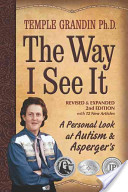 Here's more from Temple Grandin, this time on the importance of behavior teaching for children with autism spectrum disorder (ASD).
(pp 139-140) "Call me old-fashioned, but adults in the world of my youth, the 50's and 60's, believed in a stricter social behavior code than do adults in today's world. For a child with ASD, that was a good thing. Social skills were taught as a matter of course. Behavior rules were straightforward and strictly enforced, another positive strategy well aligned with the autism way of thinking. Consequences were uniformly imposed and expectations to behave were high. My mother and all the other mothers who lived in our neighborhood attended to children's behaviors, and placed value on teaching their children good manners and appropriate behaviors. To be a functioning member of society, these things were required, not optional, as they seem to be today. Kids today are allowed to do just about anything."
(p 286) "These shifting, changing social rules (or lack thereof) make it more difficult for most people with ASD to understand the social climate around them and learn to fit in. Many arrive at adulthood without even basic daily living capabilities - even children on the higher functioning end of the spectrum. They can't make a sandwich, write a check, or use public transportation. Functioning life skills have been neglected. What that is, only each individual family can say for sure. But in general, this lack of attention to teaching basic life skills while children are young and growing, is having increasingly negative repercussions on people with ASD. Quirky friends I had in college who would be diagnosed with Asperger's today, all got and kept decent jobs because they had been taught basic social skillls while they were growing up. They might still be quirky, still considered eccentric, or even odd by some, but they could function within society."
(p 283) "Every big corporation in a technical field has its department of the social misfits who make the place run. Even a bank has some purely technical people who handle accounting, fix ATMs, and run the computers. There is no black-and-white dividing line between computer nerds or geeks or Asperger's or high-functioning autism."
(pp 307-308) "If Albert Einstein were born today, he would be diagnosed with autism. He had no speech until age three, obsessively repeated certain sentences until the age of seven, and spent hours building houses from playing cards. His social skills remained odd through most of his life, and he was a self-described loner....A host of other brilliant historic figures such as Isaac Newton, Thomas Jefferson, Socrates, Lewis Carroll, Glenn Gould, and Andy Warhol are now speculated to have been on the autism spectrum."
Share this article